Methodology

Kreglish Methodology
KREGLISH is not a translation method and not a pronunciation guide in the traditional sense.
It is a reading bridge that lets learners produce correct Creole sounds immediately by reading familiar English words arranged to trigger Creole phonology.
The learner never starts with rules. They start with successful pronunciation.
Step-by-Step Flow
Read KREGLISH (English letters, Creole sounds)
The learner reads a sentence made of English words, but pronounces them naturally in English
Example: S-K say-yo key fell.
Automatic Sound Transfer
Because of how the English words were selected and sequenced, the learner unknowingly produces valid Haitian Creole sounds.
At this point:
They are already saying Creole
Without memorizing the International Phonetic Alphabet (IPA)
Without knowing Creole spelling
This is the critical psychological breakthrough.
Reveal the Creole Sentence
Now the curtain is lifted:
Are they the ones who said it?
S-K say-yo key fell
→ Èske se yo ki fè l?
Are they the ones who said it?
At this stage:
The learner recognizes that what they just said is real Creole
Confidence replaces fear
Skepticism drops, because the result is undeniable
Word Isolation (building reading + vocabulary)
Now the sentence is broken into individual Creole words:
Èske | se | yo | ki | fè | l
The learner:
Learns spelling
Learns meaning
Learns structure
Builds vocabulary naturally
No drilling.
No conjugation tables.
Just reading what they already know how to say.
Vowel Anchoring (the most important step)
This is where KREGLISH becomes a reading system, not a trick.
The learner is guided to:
Identify Creole vowels
Notice that Creole vowels never change sound
Note the vowels used in the sentence:
è = [eh]
e = [ay]
i = [ee]
o = [oh]
They are told explicitly:
“Forget the English words now. Lock in the Creole vowel sounds.”
This step is what allows transfer beyond memorized sentences.
Independent Creole Reading Begins
At this point, something important happens:
Because:
Vowels are consistent
Words are familiar
Confidence is established
The learner can now:
Read new Creole sentences
Decode unfamiliar words
Improve pronunciation while reading
This is where KREGLISH hands off to pure Creole literacy.
Example words and sentences the learner can immediately read using just 2 out of the 4 vowels: è[eh] & i[ee]
mèt, tèt, kè, wè, bwè, kwè, bèbè
ji, jip, pil, fig, piti, tifi, sibi, piki, piti
kilè, mèsi, mizè pèdi, sistèm, tikè
li lè, li bèl, li fèt, mèt li, li pi pè, li pi plis
By the time you go through a handful of Kreglish sentences, you’ll encounter the majority of the vowels and add a great number of essential words to your vocabulary.
Further down the page, you’ll see additional examples from which you’ll be able to note some additional vowels and vocabulary.
Here's How It Works
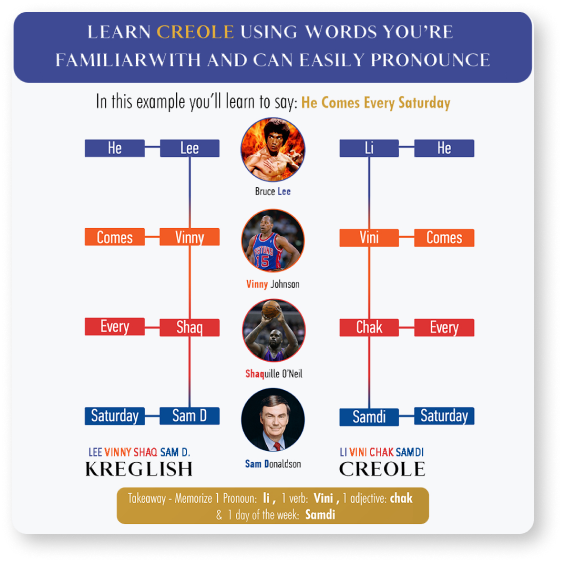
Minutes, that's all you need
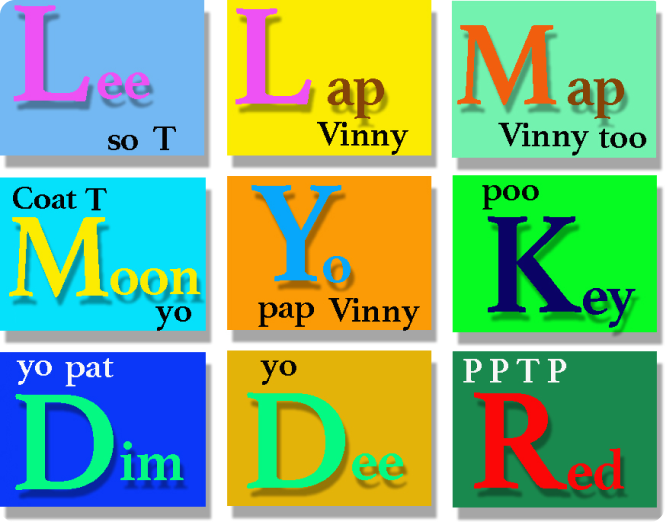
Lee Vinny Shaq Sam D
sounds just like the Creole sentence:
Li vini chak Samdi.
and it means:
She or he comes every Saturday.
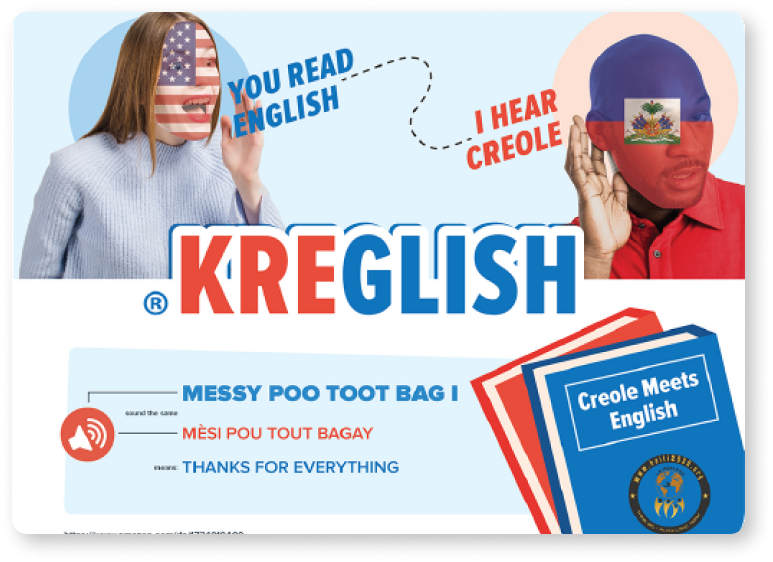
Messy poo toot bag I.
This is going to feel more like play than learning. Read this sentence out loud; don’t pause; you even want to connect bag and I at the end as if it’s just one word: Messy poo toot bag I You’ve just said “thanks for everything” in Creole.
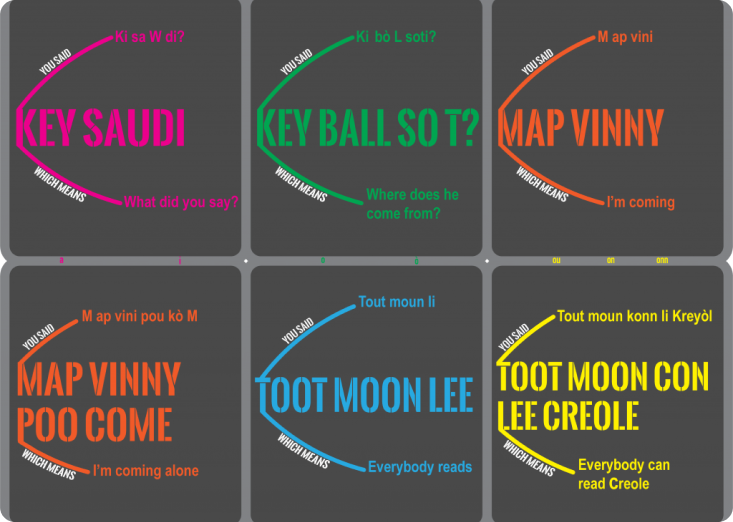
Here are a few more examples. If you have access to someone who speaks Creole, have them translate what you say so you can validate that they understand you. We’ve also added the audio so you can hear and repeat as many times as you need to. Remember that practice makes perfect.
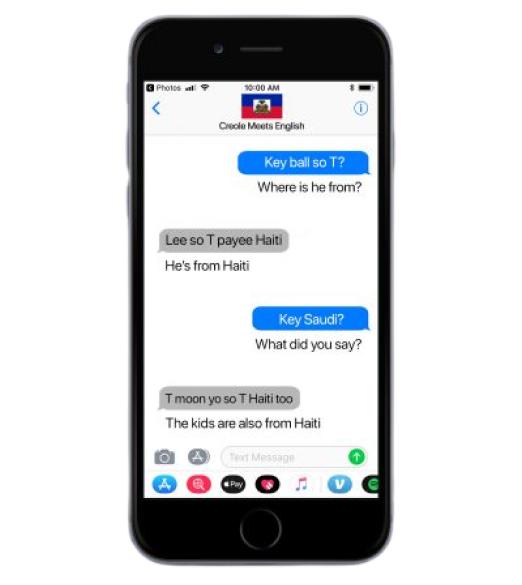
A Short Conversation
A couple of questions and answers:
Where is he from?
He’s from Haiti
What did you say?
The kids are also from Haiti
A Longer Conversation
Look at you. You’re pronouncing Creole words like a master already.
With the methods and tools that Creole Meets English will give you, you’ll be pronouncing Creole correctly within an amazingly short time.
Keep in mind that all new learners are going to have an accent when they first start learning a language. But even saying these English words the way you naturally say them is enough to be understood by a native speaker. In our mini-course Creole101 we’ll give you tips on how to pronounce words well.
Kreglish is all around us
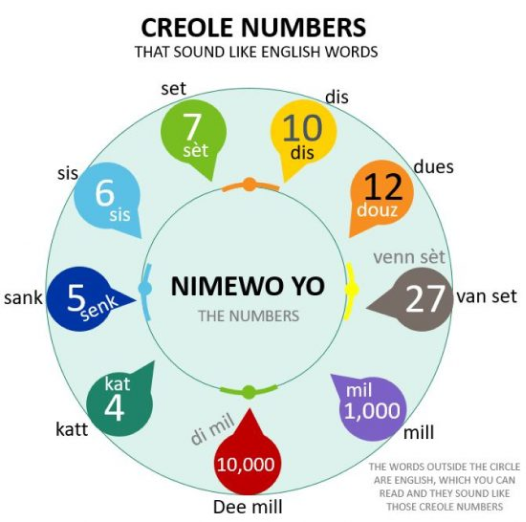
There also are some English words that sound like some Creole numbers. Here are a few examples:
- set sounds like “sèt” and is equivalent to 7
- dues sounds like “douz” and is equivalent to 12
- van katt sounds like “venn kat” and is equivalent to twenty-four, and
- mill sounds like “mil” and is equivalent to a thousand
- when 10 precedes a noun or another number, we don’t pronounce it dis, we instead pronounce it like the letter D or Dee as in Dee mill
Book Your 1st 1 on 1 Session Today!
Transition to Creole ( Kreyòl) Pronunciation
These 4 Vowels Are a Gateway to Mastering Creole
- A… E… I… and O. Not too hard at all! Learning these vowels will allow you to pronounce Kreyòl, and they never change, so what you learn today will stick with you forever.
- A is pronounced [ah] as in alpha.
- E is pronounced [ey] as in obey; the difference is that the ending y is silent.
- I is pronounced [ee] as in Vinny.
- And O is pronounced [oh] as in so; the difference is the ending o sound is sudden.
Now We’re Getting There! Let’s Learn to Read.
- Once you’ve got the hang of the vowels, you can read Creole. The sound of those vowels will take you a long way… you’ll already be able to read a surprising number of words. Here are a few you can read simply by remembering how to pronounce the above 4 vowels: la, pa, sa, ka, se, te, mare, bale, pate, pike, kepi, sale, tire, fasil, difisil, piti, pile, do, mo, moso, pote, kot, kote, poko, vote, pito.
You’ve Already Got a Rich Vocabulary
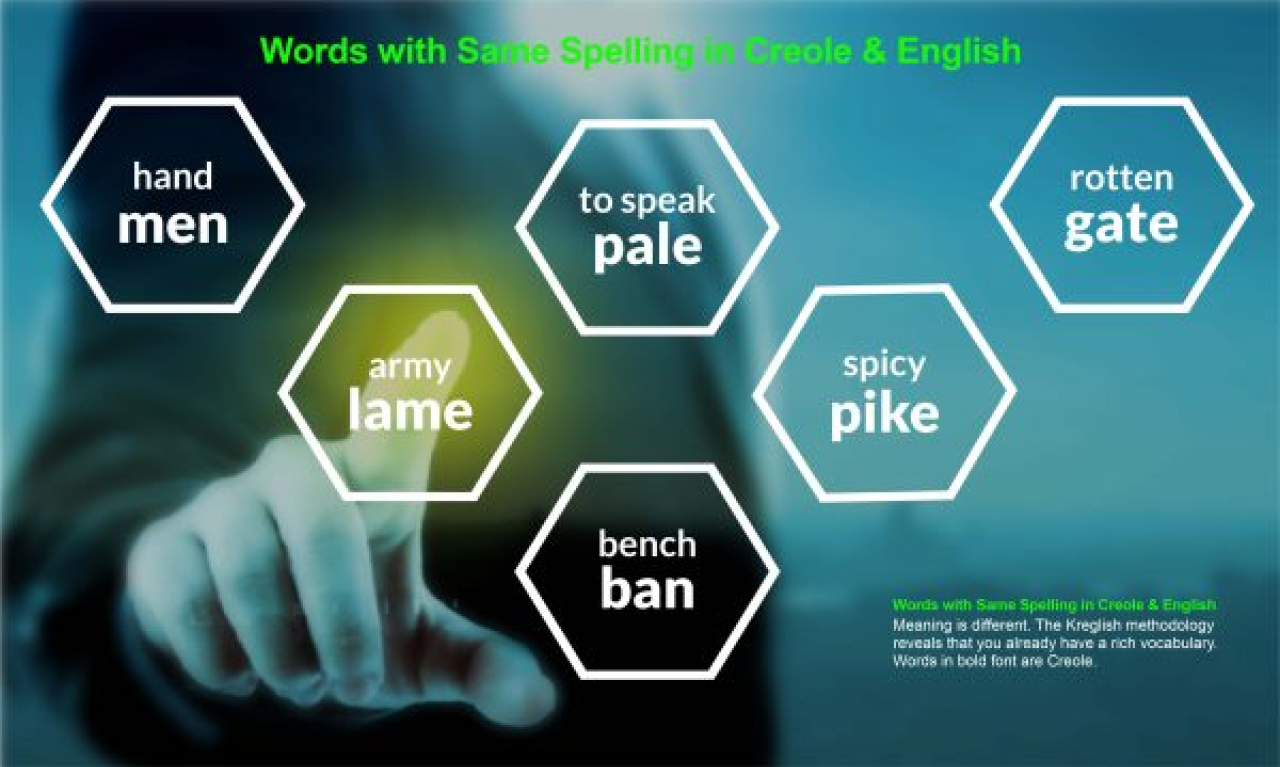
- You didn’t realize it up to now; you know a lot more than you think. Creole and English have words in common: words that are spelled the same and mean the same thing. There also are words that are called false friends; they are spelled the same but their meaning is different. After you come across all the vowels, you’ll be able to easily read them.
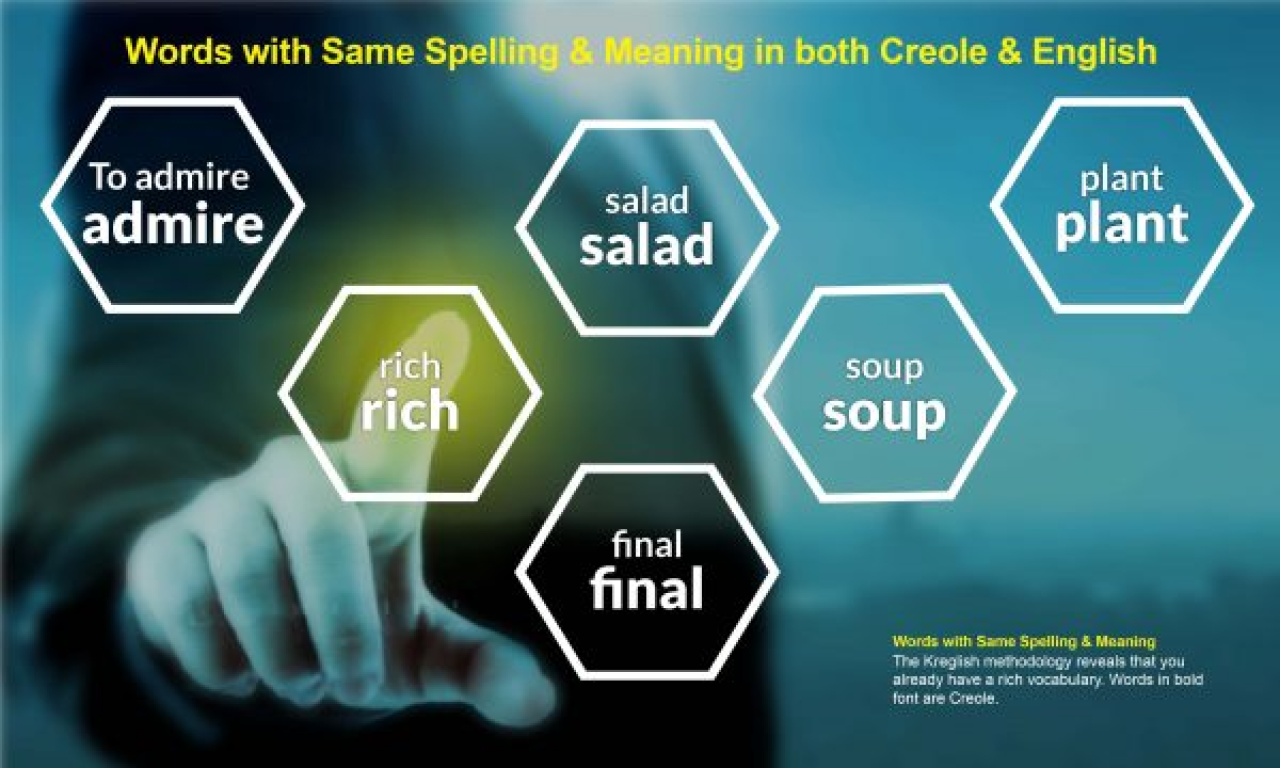
The next words have the same spelling as an English word, but they mean something different.